



Blue light glasses filter specific wavelengths of artificial light before they reach your eyes. That's the simple version. The longer version involves your circadian rhythm, your retina, your melatonin levels, and the fact that most of us spend 8-10 hours a day staring at screens that emit exactly the kind of light our biology wasn't built to handle at that volume.
Here's what they actually do, how they work, and whether they're worth wearing.

In this article:
What Is Blue Light Blocking? A Clear Definition
Blue light blocking is the selective filtering of high-energy visible (HEV) light in the 400-500nm wavelength range before it reaches the eye. The lenses don't block all light. They target specific bands of the spectrum that have the greatest potential to disrupt your eyes and your body clock.
Research published in NIH/PMC confirms that blue light is the highest energy band of the visible spectrum, and that artificial sources including screens and LED lighting emit it in concentrated form at close range.
The sun is the largest natural source of blue light, and outdoor exposure during the day is biologically beneficial. The problem isn't blue light itself. It's the artificial version of it: the concentrated spikes emitted by LED screens, digital devices, and energy-efficient office lighting that we're exposed to at close range for hours at a time, often well into the evening.
Blue light blocking lenses are designed specifically for that artificial exposure. They work across two distinct contexts: managing daytime screen glare during work hours, and protecting melatonin production in the hours before sleep.
How Do Blue Light Glasses Work? The Core Mechanics
Blue light filtering lenses use one of two methods, or a combination of both: surface coatings that reflect specific wavelengths away from the eye, and chromophores (light-absorbing pigments) embedded directly into the lens material that absorb those wavelengths before they pass through.
Research published in PLOS ONE via NIH/PMC confirmed that anti-reflective interference coatings on lens surfaces can selectively reduce blue light transmission in the 400-450nm range, while pigment-based lenses (like amber and orange tints) work through absorption, blocking a broader spectrum including blue and green wavelengths.
Neither method changes how your eyes focus or alters your eye muscles. The lenses work passively. Your visual system doesn't have to adapt to them. They simply intercept specific wavelengths before they reach the retina and let everything else through.
The key difference between lens types comes down to how much of the spectrum they filter and which wavelengths they target. Clear lenses filter a narrow, precise band. Amber and orange lenses cast a wider net. Which one you need depends entirely on what time of day you're wearing them, which we'll get to in the last section.
What Is the Purpose of Blue Light Glasses?
The core purpose is light management: reducing the impact of artificial blue light on your eyes and your body clock across the full span of your day. That sounds broad, because it is. Blue light affects two separate systems, and blue light glasses address both.
During the day, the purpose is visual comfort. Artificial light from screens and LED office lighting generates a concentrated, close-range exposure that your eyes deal with for hours at a stretch. Clear blue light lenses reduce that load without affecting alertness or color perception.
In the evening, the purpose shifts to circadian protection. Blue light in the 2-3 hours before bed suppresses melatonin, the hormone that signals to your brain that it's time to sleep. Amber lenses block the wavelengths responsible for that suppression, giving your body the biological darkness it needs to wind down properly.
Wondering whether you can wear them all day? We cover that in full in our guide to wearing blue light glasses all day.
What Do Blue Light Glasses Help With? The Key Benefits
Here's what wearing them consistently, and correctly, can do for you.
Better Sleep and Melatonin Protection
This is the most well-supported benefit. Evening blue light exposure suppresses melatonin and delays the onset of sleep. Amber lenses worn in the hours before bed block the wavelengths responsible for that suppression and help preserve your natural sleep-wake cycle.
A review published in Translational Vision Science and Technology (ARVO) via NIH/PMC found consistent evidence that blue-blocking glasses worn in the evening support sleep outcomes, particularly for people who use screens close to bedtime, work irregular hours, or struggle with sleep onset.
-
Protects natural melatonin production from evening screen use
-
Supports faster sleep onset when worn in the hours before bed
-
Particularly valuable for shift workers, night owls, and anyone managing irregular sleep schedules
Reduced Eye Discomfort During Screen Use
Digital eye discomfort, often called computer vision syndrome, is one of the most common complaints among screen-heavy workers. Symptoms include dry eyes, blurred vision, difficulty focusing, and a general heaviness around the eyes that builds through the day.
Clear blue light lenses reduce the intensity of the artificial light reaching your eyes during prolonged screen sessions.
It's worth being honest here: the research on whether blue light glasses specifically reduce eye strain is mixed. The current clinical consensus is that most digital eye discomfort is caused by reduced blinking and sustained near-focus rather than blue light alone.
That said, a 2025 study published in Cureus via NIH/PMC found that 85% of long-term wearers reported improvement in at least one symptom, with eye fatigue and dryness most commonly improved. Adherence to the 20-20-20 rule and lower daily screen time were both significant predictors of relief too.
-
Most commonly improved symptoms among long-term wearers: eye fatigue, dryness, and photophobia
-
Combining lens use with the 20-20-20 rule was a significant predictor of symptom relief
-
Benefits were more pronounced with consistent, long-term use of 6 months or more
Fewer Screen-Related Headaches
Tension headaches that build through a screen-heavy workday are a common complaint among remote workers and digital professionals. They're typically caused by a combination of sustained near-focus, reduced blinking, poor screen ergonomics, and the intensity of artificial light over extended periods.
Blue light glasses address one part of that picture by filtering the high-energy wavelengths from screens and LED lighting that contribute to visual overload.
As with eye strain, the evidence is not yet definitive, but reducing the cumulative light load across an 8-hour workday is a practical and low-effort intervention worth trying.
-
Reduces high-energy wavelength exposure linked to visual fatigue
-
Most useful as part of a broader screen ergonomics setup
-
Pair with regular breaks, correct screen distance, and reduced overhead glare for best results
Circadian Rhythm Support
Your circadian rhythm is your body's 24-hour internal clock, governing sleep, energy, hormone release, and recovery. It's calibrated largely by light. Specifically, blue light signals daytime and suppresses sleep-promoting hormones, while darkness signals night and allows melatonin to rise.
Artificial light at night, particularly from screens, confuses that system. Research from NIH/PMC confirms that blue light exposure in the evening delays circadian phase and disrupts the body's natural sleep-wake timing.
Wearing amber lenses in the 2-3 hours before bed filters those wavelengths, giving your biology the darkness signal it needs while you're still using devices.
-
Helps preserve natural sleep-wake timing in a screen-heavy environment
-
Particularly valuable for night owls, shift workers, and travelers managing jet lag
-
Supports the downstream effects of better sleep: energy, mood, focus, and recovery

Choosing Your Shield: Daytime vs. Nighttime Support
One pair of generic blue light glasses isn't enough. Your light-filtering needs are completely different at 10am versus 10pm, and a lens designed for one window can actually work against you in the other.
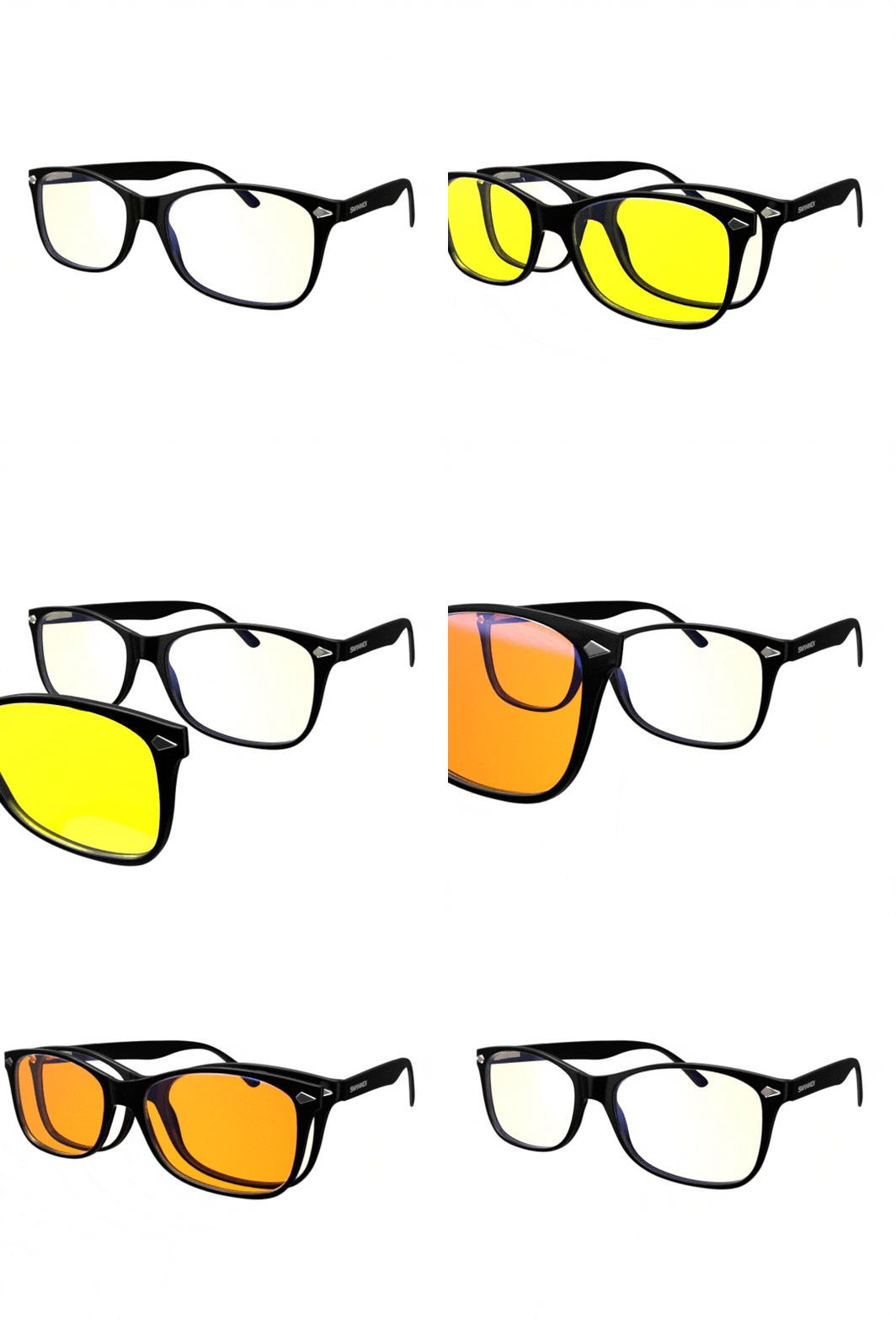
During the day, you need a clear lens that filters artificial spikes without blocking the broader blue wavelengths your brain needs for alertness and focus. Focus Swannies are built for this window, with CR-39 prescription-grade lenses and anti-reflective coatings that give you all-day optical clarity without color distortion or drowsiness.
In the evening, you need a lens that blocks the full melatonin-suppressing spectrum. Sleep Swannies use deep amber lenses to block blue and green wavelengths (400-550nm), giving your body the biological darkness it needs to wind down even when screens are still on.
Think of it as a system rather than a single tool. Clear lenses manage your daytime light environment. Amber lenses protect your night. Together, they cover the full arc of what blue light actually does to your body across a modern day.


