
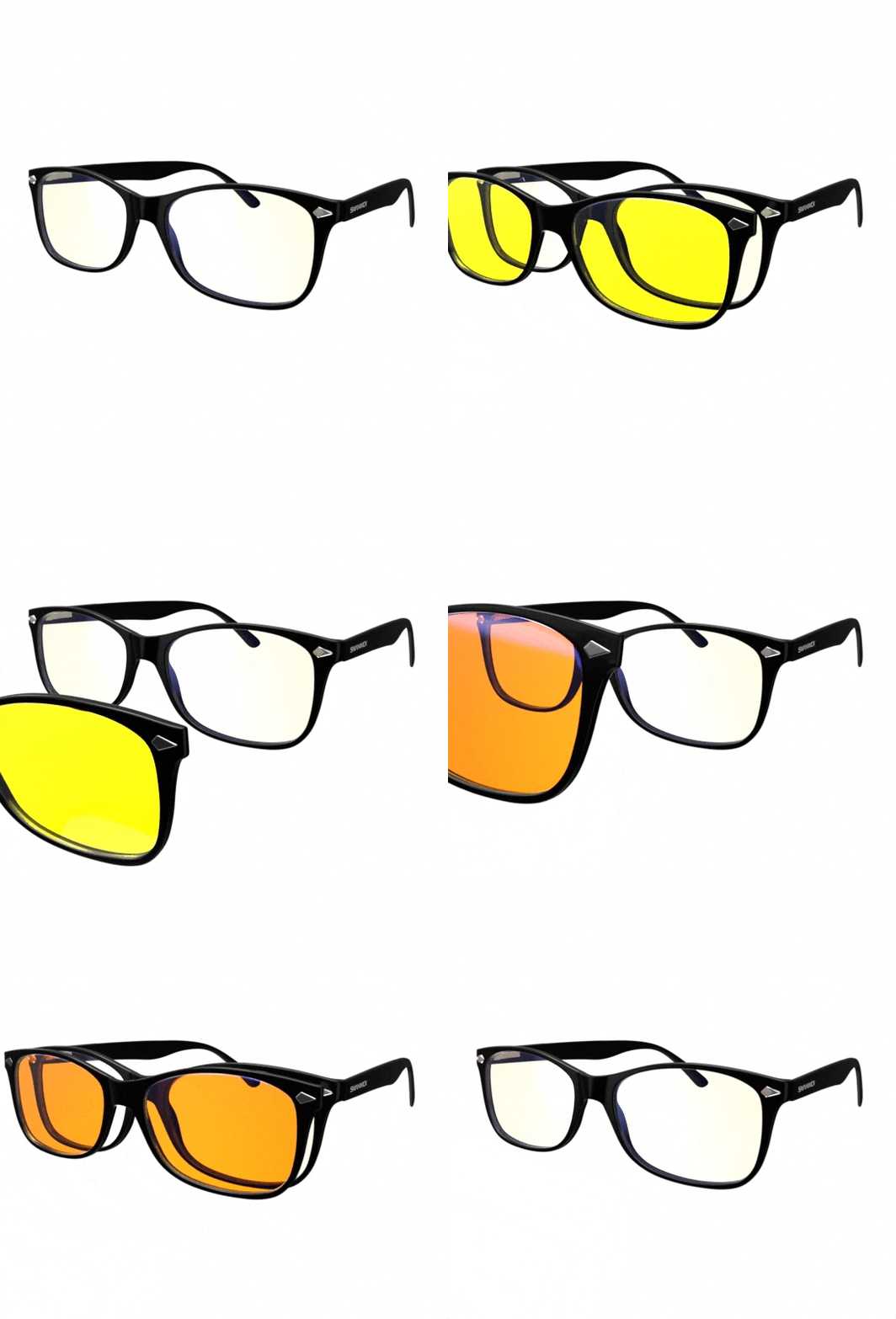



If you wear blue light glasses for work, you've probably wondered whether keeping them on all day is fine or whether there's a point at which they stop helping and start causing problems. It's a fair question, and the answer depends less on how long you wear them and more on which lens you're wearing and when.
This guide breaks down the safety question, explains what can go wrong (and why), and gives you a clear day-to-night routine so your glasses are always working with your biology rather than against it.

In this article:
-
When Can Wearing Blue Light Glasses All Day Become a Problem?
-
Signs You Should Be Wearing Screen Glasses Throughout the Day
Is It Safe to Wear Blue Light Glasses All Day?
Yes. Wearing high-quality, clear-lens blue light glasses all day is safe. They won't damage your eyes, weaken your vision, or create any kind of visual dependency.
They don't change how your eyes focus or alter your eye muscles. They work purely as a filter, sitting between artificial light and your retina, quietly doing their job without your eyes having to adjust to them.
No research has found evidence that blue light filtering lenses harm visual function. A 2023 Cochrane review of 17 clinical trials found no meaningful negative effects on visual performance from wearing them. The American Academy of Ophthalmology raises no safety concerns about wearing them.
Think of clear blue light lenses the same way you'd think about anti-reflective coatings or UV protection. Passive, non-invasive, and built for continuous wear.
The only thing that changes the picture is wearing the wrong type of lens at the wrong time of day, which we'll get into below.
When Can Wearing Blue Light Glasses All Day Become a Problem?
Wearing blue light glasses all day isn't the problem. Problems come from two things: poor lens quality and using the wrong lens at the wrong time.
Poorly made lenses
Cheap lenses can distort your vision, create glare, and actually cause the headaches they're supposed to prevent. If your glasses make your vision feel off, the lens quality is almost certainly the issue, not blue light filtering itself. Prescription-grade optics with proper anti-reflective coatings (like CR-39 lenses) eliminate this entirely.
The wrong lens at the wrong time
Not all blue light is the same. Daytime blue light from the sun and indoor lighting is biologically necessary: it keeps you alert, supports your mood, and keeps your body clock on schedule.
Wearing heavy amber or orange lenses during the day cuts off that signal and can leave you feeling flat or foggy at exactly the time your brain needs to be switched on.
The answer isn't to avoid blue light glasses during the day. It's to wear the right lens for the right time, which is exactly what a well-designed circadian lens system is built around.
The Day vs. Night Lens Rule: How to Wear Them Correctly
The key to getting the most out of blue light glasses is matching the lens to the time of day. Here's how the routine breaks down.
Clear Lenses for Daytime Office Use
Clear lenses are made for all-day indoor wear: desk work, video calls, studying, screens of any kind. They filter the artificial light spikes from devices and LED office lighting while keeping your color perception and visual clarity exactly as they should be.
Critically, they let through the broader blue-light range your brain needs during the day for alertness and focus. You stay sharp. Your screen looks normal. And your eyes aren't fighting artificial light for eight hours straight.
When to wear them: From the start of your workday through to early evening. Focus Swannies are built for this window, with CR-39 prescription-grade lenses and anti-reflective coatings for all-day clarity.
When to switch: Once your workday ends and you move into your evening wind-down.
Amber Lenses for Evening Screen Time
Amber and orange lenses are made for nighttime. Worn 2-3 hours before bed, they block the blue and green wavelengths (400-550nm) that suppress melatonin, helping your brain shift out of alert mode and into genuine wind-down.
The evidence for evening use is strong. A systematic review on PubMed found that blue-blocking glasses worn before bed improve sleep by protecting melatonin onset, particularly for people with insomnia, delayed sleep phase, shift work, or jet lag.
When to wear them: 2-3 hours before your target bedtime. Sleep Swannies block melatonin-suppressing wavelengths while still letting you watch TV, scroll, or wind down socially without sitting in darkness.
What not to do: Don't wear amber lenses during the day. The tint blocks the natural light your body clock depends on, and you'll feel it.

Signs You Should Be Wearing Screen Glasses Throughout the Day
Not everyone needs all-day protection. But if your day involves 6+ hours across screens, back-to-back calls, and harsh office lighting, the cumulative load on your eyes is real. These are the signs it's worth wearing them consistently:
-
Tension headaches by mid-afternoon: particularly around the temples or behind the eyes after sustained screen use
-
Dry or gritty eyes: a sign your blink rate has dropped and your tear film is struggling
-
Blurred vision that clears after rest: temporary focus fatigue from hours of near-distance screen work
-
Difficulty falling asleep despite feeling tired: a classic sign that evening blue light is disrupting melatonin even when your body is ready to wind down
-
A wired feeling at night: your nervous system still in high-alert mode long after screens are put away
-
Working under harsh fluorescent or LED lighting all day: artificial commercial lighting hits the same stimulating wavelengths as screens, compounding the load
If three or more of these sound familiar, building all-day clear lens wear into your routine is worth it.
Beyond Glasses: Holistic Habits for Eye Comfort
Keeping your daytime glasses on at your desk is a strong baseline. But passive protection works best when it's paired with habits that keep your eyes agile throughout the day.
The most impactful addition is a short eye exercise routine during work breaks. The 20-20-20 rule, focus shifting, and deliberate blinking resets directly address the muscular fatigue that builds from hours of fixed near-focus work. They take minutes. Our guide to 6 eye exercises to improve sight covers the full routine with step-by-step instructions.
A few environmental tweaks help too: screen at arm's length, reduce overhead glare where you can, and keep your lighting warm in the evening. Small setup changes reduce the baseline strain before glasses or exercises even come into play.
Your environment is either working for you or against you, and most of the fixes take about 30 seconds.
The full picture: clear lenses during the day, short exercise breaks, amber lenses in the evening, and a setup that isn't working against you. It's not an elaborate routine. Just a few deliberate choices that add up.


