



Sunglasses and blue light glasses look nearly identical. Same frames, same lens format, often the same styles. But under the lens, they're built for entirely different environments and entirely different threats. Wearing one when you need the other isn't just ineffective; it can actively work against you.
Here's exactly what sunglasses do, what they don't do, and when you need purpose-built blue light protection instead.

In this article:
Do Sunglasses Block Blue Light? The Core Answer
Some sunglasses block a portion of blue light, but most don't, and none are designed to. Standard sunglasses are engineered specifically to block ultraviolet (UV) radiation and reduce overall brightness. Blue light filtering is an entirely separate function that requires different coatings or lens materials, and most sunglasses don't include them.
Whether a pair of sunglasses blocks blue light depends almost entirely on the tint. Darker and more heavily pigmented lenses, particularly those with amber, orange, or brown tints, do filter some blue wavelengths as a byproduct of the tint chemistry. Clear or grey lenses typically don't. But even in the best case, a pair of sunglasses designed for outdoor UV protection is not calibrated to selectively target the specific wavelengths that matter most for eye comfort or circadian health.
The short answer: UV protection and blue light filtering are different things, achieved in different ways, for different purposes. Having one doesn't give you the other.
The Difference Between UV Protection and Blue Light Filtering
UV light and blue light sit in adjacent but distinct bands of the electromagnetic spectrum. UV radiation spans 100-400nm and is invisible to the human eye. It's subdivided into UVC (100-280nm, absorbed by the atmosphere), UVB (280-320nm), and UVA (320-400nm). Both UVB and UVA reach the eye from sunlight and are linked to cataracts, eye growths, and long-term retinal damage.
Blue light begins where UV ends, at 400nm, and runs to approximately 500nm. It sits within the visible spectrum, which means your eye can see it, and it's emitted by both sunlight and artificial sources including LED screens, smartphones, and indoor lighting.
The American Academy of Ophthalmology confirms that UV protection in sunglasses is determined by lens coatings or materials, and is entirely independent of lens color or darkness. A lens can be pitch black and still let blue light pass through freely.
This is the core confusion. When people see dark lenses and assume comprehensive light protection, they're conflating two unrelated things. UV protection blocks invisible radiation from sunlight. Blue light filtering targets specific visible wavelengths from both sunlight and artificial sources, particularly screens and LEDs.
A pair of sunglasses with 100% UV400 protection blocks all UV rays up to 400nm. It says nothing about what happens to the 400-500nm range. That band passes through unless the lens is specifically designed to filter it.
Are All Sunglasses Blue Light Blocking? Lens Tints Matter
Not all sunglass tints behave the same way when it comes to blue light. The color and density of the lens directly influences which wavelengths get filtered. Here's how the most common tints compare:
-
Grey/dark neutral tints: reduce overall brightness and block UV, but transmit blue light wavelengths with minimal filtering. The most common sunglass tint and the least effective for blue light.
-
Green tints: similar to grey. Good contrast and color accuracy outdoors, but not designed to target blue wavelengths.
-
Yellow/amber tints: absorb blue wavelengths as part of their tint chemistry, offering meaningful blue light reduction. The same pigment principle behind purpose-built blue light blocking glasses. Amber sunglasses worn outdoors do filter a portion of blue light, but they're still optimized for outdoor brightness, not screen use.
-
Brown/copper tints: moderate blue light filtration, better than grey but less than deep amber. Good all-round outdoor option.
-
Mirrored or polarized coatings: reduce glare and overall light intensity, but polarization doesn't specifically target blue wavelengths. A polarized grey lens is still a grey lens underneath.
Even in the case of amber sunglasses, the distinction matters. A sunglass amber lens is calibrated for outdoor brightness and tends to be much darker than the lenses in purpose-built blue light glasses. That level of darkness is appropriate outside. Indoors, it creates its own set of problems.
Why You Shouldn't Wear Sunglasses Indoors for Screen Glare
It seems intuitive: screens are bright, sunglasses reduce brightness, so wearing sunglasses at your desk should help. It doesn't. It makes things worse.
When you wear dark lenses in a dim environment, your pupils dilate to compensate for the reduced light. As the AAO explains, in low light the iris opens wider and the pupil enlarges, letting more light reach the retina. And a dilated pupil lets in more light per unit area, which means more of the screen's high-energy wavelengths reach your retina, not less.
You've essentially made your visual system work harder to gather enough light to read pixelated text, while simultaneously increasing the contrast demand on your eyes.
The mechanics of clear indoor blue light lenses work the opposite way. A clear or very lightly tinted lens selectively filters the specific wavelength spikes that cause strain, without reducing overall brightness. Your pupils stay at a normal size. ANd your visual system processes the screen at normal contrast. The only thing that changes is the spectral composition of the light reaching your retina.
Sunglasses are tools for bright outdoor environments. Using them while looking at a bright screen is a bit like wearing a thick winter coat because the air conditioning is slightly too cold. It addresses the wrong part of the problem and creates new ones.

Finding the Right Shield: Purpose-Built Eyewear
The right lens depends entirely on your environment and what you're protecting against. Outdoors, high-quality sunglasses with 100% UV400 protection are the right tool.
The AAO recommends looking for lenses that block 99-100% of UV light and wrap around to prevent light entering from the sides. Tint color matters less than the UV rating. A light-colored lens with proper UV coating protects better than a dark lens without one.
Indoors, at a screen, or in an office environment, sunglasses are the wrong tool entirely. What you need is a lens designed specifically for artificial light environments: one that targets the concentrated blue light spikes from screens and LEDs without dimming your overall vision.
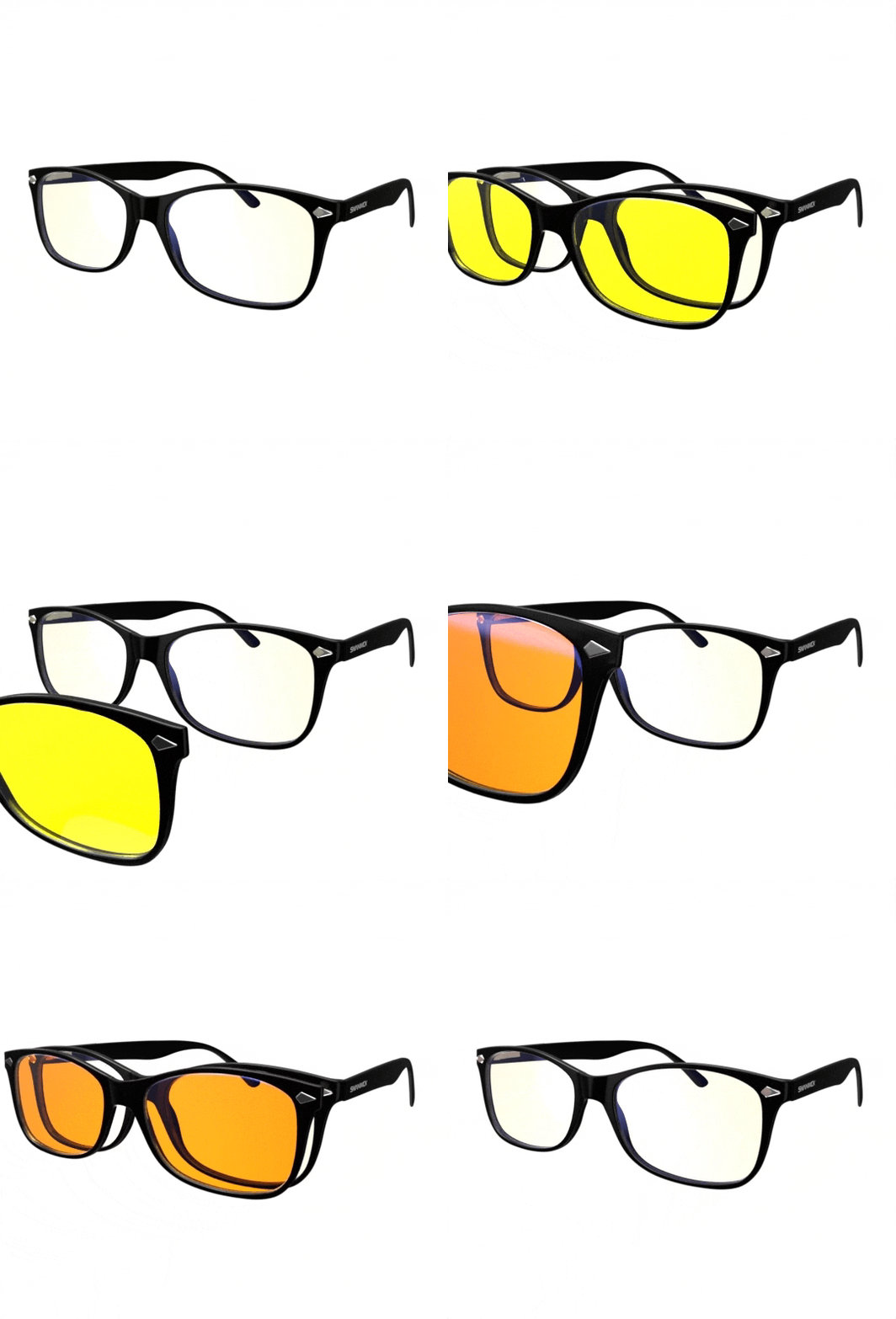
Focus Swannies are built for this window, using CR-39 prescription-grade lenses with anti-reflective coatings that filter the 400-450nm range linked to eye strain, without affecting color perception or alertness.
In the evening, the priority shifts from eye comfort to circadian protection. Blue and green wavelengths in the 400-550nm range suppress melatonin and delay sleep onset.
Sleep Swannies use deep amber lenses to block this range, signaling to your brain that the day is ending even when screens are still on.
Think of it as three distinct tools for three distinct environments: sunglasses for outdoor UV protection, clear lenses for daytime screen work, and amber lenses for evening wind-down. Each one is purpose-built for a specific light environment. None of them substitute for the others.


