



If your headaches tend to show up mid-afternoon, build behind the eyes after a long screen day, or flare up during late-night scrolling, there's a good chance your display is involved. And blue light glasses can help with exactly that kind of headache.
They're not a painkiller and they won't touch a migraine driven by genetics or stress. But for the specific pattern of tension that builds from screen exposure, filtering the right wavelengths makes a real difference.
Here's what's actually causing those headaches, how filtering light addresses them, and how to use the right lens at the right time.

In this article:
The Connection Between Digital Screens and Headaches
Screen-related headaches aren't imaginary or vague. They have a specific physiological mechanism. When you stare at a high-contrast digital display for hours, your eye muscles are constantly making micro-adjustments to maintain focus, a process called accommodation.
When accommodation is sustained without rest, the extraocular muscles fatigue, and the tension that results is transmitted through the trigeminal nerve, which innervates both the eye and the surrounding structures of the head.
Research published in NIH/PMC confirms that digital eye strain is a multifactorial condition involving accommodation stress, vergence demand, and reduced blinking, all factors that converge to produce the eye fatigue, headaches, and visual discomfort that build through a screen-heavy workday.
Blue light adds another layer to this. Emerging research published in NIH/PMC shows that blue light exposure overstimulates intrinsically photosensitive retinal ganglion cells (ipRGCs), increasing activity in the trigeminovascular system.
So in people with light sensitivity or migraine predisposition, this overstimulation can be enough to trigger or significantly worsen headache symptoms.
Screen headaches aren't random. The research points to a consistent pattern: the longer the screen session and the more blue-weighted the light, the greater the combined load of muscular fatigue and photic stimulation on your visual system.
Can Blue Light Glasses Help with Headaches?
Yes, for screen-induced headaches specifically. Blue light glasses reduce the high-energy wavelength load reaching your eyes during screen use, which directly addresses one of the key triggers driving that pattern of tension.
They won't eliminate the muscular fatigue from sustained near-focus, but they reduce the photic component that compounds it.
A study published in NIH/PMC found that patients with migraines who wore blue-blocking glasses at night showed a statistically significant reduction in headache days over a four-week period.
The mechanism is consistent with what we know about ipRGC activation and trigeminovascular sensitivity to light.
That said, it's worth being clear about what they don't do. Blue light glasses are not a treatment for cluster headaches, chronic genetic migraines, sinus headaches, or headaches caused by dehydration, stress, or systemic conditions.
The full explanation of how blue light glasses work covers the filtration mechanics in detail, but the short version is: they're most effective when your headaches have a clear digital trigger.
If you regularly get headaches during or after screen sessions, that's the pattern they're designed to address. If your headaches are unrelated to screens or light exposure, the glasses alone won't solve them.
How Filtering Screen Light Relieves Tension
Blue light filtering lenses work by intercepting the highest-energy wavelengths before they reach the retina, reducing the total photic load your visual system has to process during screen use.
And when your eyes aren't constantly managing high-intensity light spikes, the visual system works less hard, and the downstream tension that causes headaches is reduced.
A 2025 study published in Cureus found that photophobia (light sensitivity) was among the most commonly improved symptoms in long-term blue light lens wearers, with 61.6% of regular users reporting improvement compared to 21.3% of non-regular users.
And a separate clinical study published in NIH/PMC found a significant positive correlation between light sensitivity intensity and number of headache days in migraine patients, suggesting that reducing photophobia may have a direct downstream effect on headache frequency.
Here's specifically what filtering does:
-
Reduces ipRGC overstimulation: the retinal cells most sensitive to blue light and most linked to light-triggered headache are less activated
-
Lowers trigeminovascular activity: less photic input to the pathway responsible for light-sensitive headache and migraine exacerbation
-
Reduces glare contrast: high-contrast glare forces sustained accommodative effort; filtering softens that demand
-
Supports better evening light management: evening blue light disrupts melatonin and sleep quality; poor sleep is itself a well-established headache trigger

Maximizing Relief: Clear vs. Amber Lenses for Headaches
The type of lens you need depends on when your headaches tend to hit. Screen-induced headaches that build through the workday call for daytime filtering. Headaches that arrive in the evening or affect your sleep call for a heavier intervention.
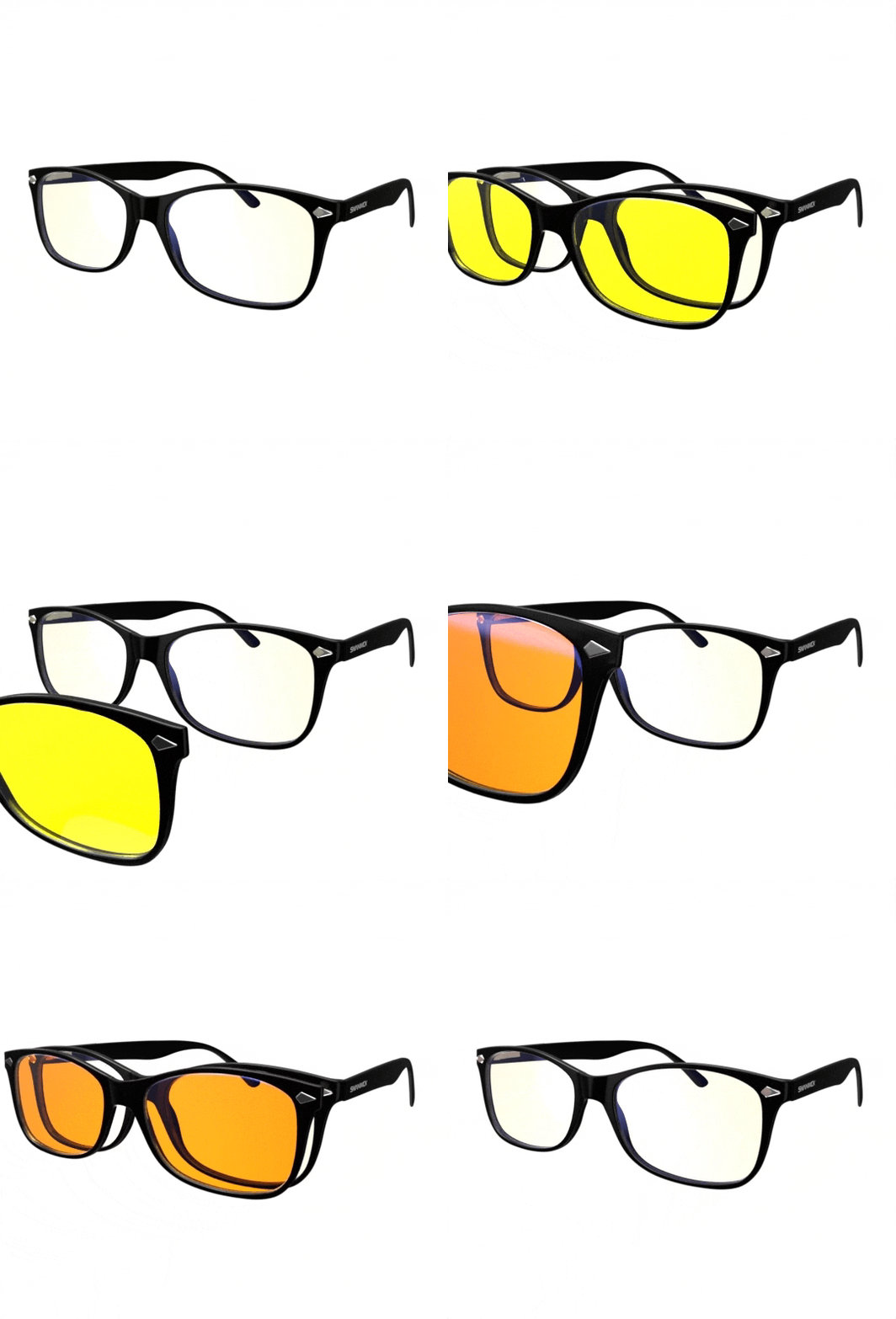
During the day: clear lenses filter the concentrated artificial blue light spikes from screens and LED office lighting without affecting your alertness or color perception. They reduce the cumulative photic load your eyes handle across a full workday, which is exactly where screen tension headaches build.
Focus Swannies are designed for this window, with CR-39 prescription-grade lenses and anti-reflective coatings for all-day optical clarity.
In the evening: amber lenses block the broader blue and green spectrum (400-550nm) that suppresses melatonin and keeps the nervous system stimulated. Poor sleep is one of the most consistent headache triggers, and evening screen exposure is one of the most consistent sleep disruptors.
Sleep Swannies handle this window, giving your brain the light environment it needs to wind down and recover.
For people with frequent screen headaches, using both is the most complete approach: daytime clear lenses to reduce the immediate trigger, evening amber lenses to protect the sleep that prevents the next day's headache from starting at a deficit.
Holistic Habits to Prevent Digital Fatigue
Blue light glasses address the light component of screen headaches. But as we covered above, there are other contributing factors: sustained near-focus, reduced blinking, and poor screen ergonomics that glasses alone can't solve.
Combining lens use with a few simple habits gives you full-spectrum protection.
-
The 20-20-20 rule: every 20 minutes, look at something 20 feet away for 20 seconds. This gives the ciliary muscles responsible for accommodation the regular release they need to avoid sustained tension.
-
Warm your display settings: shift your screen's color temperature to a warmer profile in the evening using your device's built-in settings or a tool like f.lux. This reduces the blue peak emission from your screen before amber lenses take over.
-
Screen distance and positioning: your screen should be roughly arm's length away and slightly below eye level. This reduces the accommodative demand and limits the amount of upward glare reaching your eyes.
-
Eye exercises: targeted exercises for convergence, tracking, and focus shifting directly address the muscular fatigue that drives screen headaches. Our guide to 6 eye exercises to improve sight walks through the full routine with step-by-step instructions.
-
Consistent sleep: sleep deprivation significantly lowers your threshold for headache. Managing evening light exposure through amber lenses is one of the most direct ways to protect sleep quality and reduce next-day headache risk.
Screen headaches are predictable, which means they're also preventable. The pattern is consistent enough that addressing the main inputs: light load, muscular fatigue, and sleep quality usually breaks the cycle.


