



Good blue light glasses don't hurt your eyes. If yours are causing discomfort, headaches, or strain, something specific is causing it, and it's almost always fixable.
The problem is usually the lenses, the fit, or an adjustment period, not the concept of blue light filtering itself.
Here's how to work out what's going wrong and what to do about it.

In this article:
Why Do Blue Light Glasses Hurt My Eyes? The Main Reasons
High-quality blue light glasses don't cause eye pain. The American Academy of Ophthalmology confirms there is no evidence that blue light filtering coatings damage the eyes.
If your glasses are hurting you, the cause is almost always one of four things: cheap lens quality, incorrect fit, an unnecessary prescription power, or a short adaptation period.
The distinction matters because people often blame the filtering technology when the real problem is the lens itself. A poor-quality lens warps light slightly as it passes through, creating a constant low-level optical conflict that your visual system has to work against all day. That's what causes the discomfort, not the blue light coating.
Here's a quick way to assess which issue you're dealing with:
-
Discomfort fades after a few days: adaptation period. Your eyes are adjusting
-
Discomfort is worse at the lens edges: lens distortion from poor-quality optics
-
Pressure on your nose bridge or temples: frame fit issue
-
Vision feels slightly off or blurry: wrong magnification level (if you bought readers with blue light coating)
Do Blue Light Glasses Hurt Your Eyes at First? The Adaptation Period
Yes, some people experience mild discomfort in the first few days of wearing any new eyewear, including blue light glasses. This is a normal neurological adjustment, not a sign that the glasses are harmful. Your brain and ciliary muscles are calibrating to a slightly altered light spectrum and contrast balance.
The adjustment is typically brief. Most people who experience initial discomfort find it resolves within two to five days of consistent wear. During that window, your visual system is essentially learning to process the filtered spectrum as its new baseline.
A few things that help during the adjustment period:
-
Start with shorter wear sessions and build up gradually over the first few days
-
Take them off during non-screen activities initially
-
Ensure your screen brightness and environment lighting are appropriate alongside the glasses
If discomfort continues past a week or gets worse rather than better, the issue isn't adaptation. It's lens quality or fit, and that needs to be addressed rather than waited out.
Can Blue Light Glasses Cause Headaches? The Quality Factor
Premium blue light glasses are designed to relieve screen-related headaches, not cause them. But cheap, poorly manufactured lenses can do the opposite. This is one of the most common complaints from people who bought low-cost readers online or from a drugstore shelf.
The mechanism is straightforward: cheap plastic lenses often have uneven thickness, micro-warping from poor manufacturing, or inconsistent tinting.
These imperfections force your eyes to make constant micro-adjustments to maintain focus as light bends unevenly through the lens. That sustained accommodation effort produces exactly the kind of tension headache the glasses were supposed to prevent.
The quality marker to look for is prescription-grade optical material with proper multi-layer anti-reflective coatings applied to both sides.
As All About Vision confirms, optometrists consider blue light filtering AR coatings safe and beneficial. The issue is when those coatings are applied poorly or to low-grade lens material that introduces its own optical distortion.
For a full picture of how well-engineered lenses work to relieve rather than create headaches, our article on whether blue light glasses help with headaches covers the research in detail.
[IMAGE 2]
Suggested image: Side-by-side comparison of cheap drugstore readers vs. premium blue light glasses. Clean product photography reinforcing the quality distinction.

Common Mistakes to Avoid to Stop Eyestrain
Most eye discomfort from blue light glasses comes down to a handful of avoidable errors. Here's what to check:
-
Buying based on price alone. Sub-standard lens material and poor-quality coatings are the primary cause of glasses-induced eye strain. If a pair costs less than a reasonable meal, the optics are probably not prescription grade.
-
Wearing the wrong diopter strength. If you bought blue light reading glasses with magnification, the wrong power creates constant accommodation strain. Err toward less magnification rather than more. Too strong causes more problems than slightly too weak.
-
Frames that don't fit properly. Nose bridge pressure and temple pressure are physical discomfort, but they also affect how the lens sits in front of your eye. A lens that isn't centered correctly in front of your pupil creates optical misalignment that compounds visual strain.
-
Using amber lenses during the day. Amber or orange lenses are designed for evening use. Wearing them during the day blocks the natural blue light your brain needs for alertness, which leaves you feeling flat and can cause a dull headache from the suppressed alertness signal. Clear lenses are for daytime; amber lenses are for evening.
-
Screen too close or too bright. Blue light glasses filter light but they can't compensate for poor screen ergonomics. Screen distance should be roughly arm's length, and brightness should match your ambient environment. Not at max brightness in a dim room.
-
Not giving the adjustment period enough time. Switching from no glasses to any glasses requires a short neurological adjustment. Stopping after two days because of minor discomfort may mean giving up before the adaptation is complete.
How to Choose High-Quality Eyewear That Protects Your Sight
The fix for most glasses-related eye discomfort is straightforward: get a pair built to proper optical standards. Here's what that actually means in practice.
-
CR-39 or better lens material. Prescription-grade optical plastic that transmits light cleanly without edge distortion. This is the minimum standard for lenses that won't introduce their own visual strain.
-
Multi-layer anti-reflective coating on both sides. This eliminates the reflections that cause glare and the visual noise that forces your eyes to work harder to focus on screen content.
-
Verified spectral filtering. Clear lenses targeting the 400-450nm range for daytime use. Amber lenses targeting the 400-550nm range for evening use. Vague claims without spectral specifics are a warning sign.
-
Lightweight frames with proper fit. Frames that sit correctly in front of your pupils, don't press on your nose or temples, and are light enough to forget you're wearing them.
-
The right lens for the right time of day. Clear lenses for screen work during the day. Amber lenses for the evening wind-down. Using both correctly is what gives you full-spectrum eye protection across a modern day.
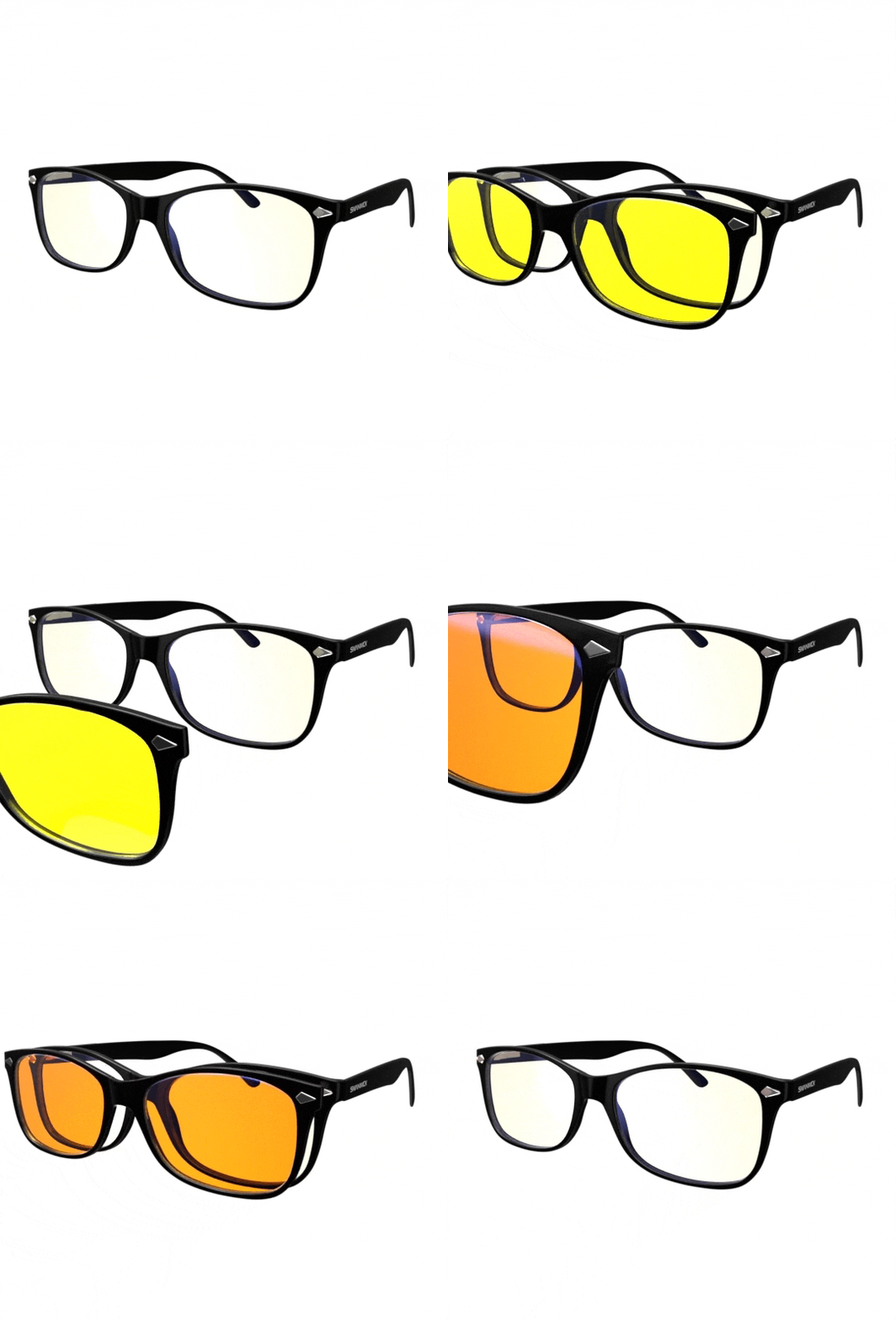
Swanwick's Focus Swannies are built to this standard for daytime use: CR-39 prescription-grade lenses, proper AR coatings, and lightweight frames designed for all-day wear without discomfort.
For the evening, Sleep Swannies provide deep amber filtering that protects your melatonin without the optical distortion issues that cause headaches with cheap alternatives.
To understand exactly what properly engineered lenses do and how they work, our guide on what blue light glasses do covers the full mechanics. The short version: good glasses make your eyes feel better. If yours don't, get better glasses.


