



If you wear contact lenses and spend most of your day on screens, you're likely dealing with a specific kind of eye fatigue that gets worse as the day goes on. The dryness, the heaviness, the slow-to-focus blur by late afternoon. Contact lens wearers are disproportionately affected by digital eye strain, and blue light glasses offer a practical, non-invasive solution that works on top of your existing correction.
Here's everything you need to know about combining them.

In this article:
-
Can You Wear Blue Light Glasses with Contacts? The Core Answer
-
The Double Dryness Effect: Why Contact Wearers Face More Screen Strain
-
Blue Light Glasses vs. Blue Light Contacts: Understanding Your Options
Can You Wear Blue Light Glasses with Contacts? The Core Answer
Yes, completely. Wearing non-prescription blue light glasses over contact lenses is safe, comfortable, and optically straightforward. Your contact lenses sit directly on the eye and handle your vision correction. A pair of non-prescription (plano) blue light glasses sits in front of that, acting purely as an external filter for the light spectrum reaching your eye. The two systems don't interfere with each other.
Non-prescription blue light glasses have no optical power. They don't magnify, distort, or alter how your corrected vision works through the contacts. They simply intercept high-energy visible (HEV) light between the screen and your eye before it reaches the lens surface of your contact.
The combination is particularly well-suited to contact lens wearers precisely because contacts leave your eyes exposed to the full light environment. Glasses sit in front of that exposure and do the filtering work that contacts can't.
The Double Dryness Effect: Why Contact Wearers Face More Screen Strain
Screen use reduces your natural blink rate by up to 50%, as confirmed by research reviewed in multiple digital eye strain studies. Blinking is what replenishes the tear film that keeps your eyes lubricated and your contact lenses hydrated. When blink rate drops, that tear film evaporates faster than it's being replaced.
For contact lens wearers, this creates a compounding problem. The contact lens itself depends on that tear film to stay comfortable and maintain its position on the eye. As the tear film depletes, the lens starts to dry out, tighten, and drag slightly with each blink. The result is a specific combination of digital eye strain and contact lens dehydration that non-contact wearers simply don't experience at the same intensity.
Blue light from screens adds to this. High-energy visible light at close range over extended periods contributes to the visual fatigue and surface stress that makes the dryness feel worse. Filtering that light doesn't replace blinking, but it does reduce one of the key inputs driving the cycle.
The practical fix is a combination: conscious blinking habits and screen breaks to maintain tear film, and blue light filtering to reduce the photic load your eyes are managing while the contacts are in.
The Benefits of Layering Blue Light Glasses Over Contacts
Here's what the combination delivers for screen-heavy contact lens wearers:
-
Reduced visual fatigue by late afternoon. Filtering the high-energy wavelengths from screens reduces the cumulative photic load your visual system handles across a full workday. For contact lens wearers already managing lens-related fatigue, this makes a meaningful difference to how your eyes feel by 4pm.
-
Less surface irritation from screen glare. Glare and high-contrast light spikes from screens cause your eyes to contract and strain reflexively. Filtering reduces that reflex, which in turn reduces the squinting and tension that accelerates contact lens dryness.
-
Evening melatonin protection. If you keep your contacts in during the evening, switching to amber blue light lenses protects your melatonin production from evening screen exposure. This is separate from the eye comfort benefit. It's about preserving your sleep quality.
-
No prescription needed. Non-prescription blue light glasses are available to anyone regardless of their vision correction situation. You don't need to update a prescription or match your contact lens correction. Plano lenses have zero optical power and work for everyone.
-
Flexible daily use. You can put them on when you start screen work and take them off when you step away. They don't commit you to anything. For a full breakdown of how to structure daily wear, our guide to wearing blue light glasses all day covers the day-to-night routine in detail.

Blue Light Glasses vs. Blue Light Contacts: Understanding Your Options
Blue light filtering contact lenses do exist. A small number of manufacturers offer contacts with a built-in blue light filter as part of the lens material. On the surface, this seems like a simpler solution: one lens doing two jobs. In practice, the tradeoffs are significant.
Blue light filtering contacts are a fixed, always-on filter. You can't remove them when you step outside into natural light, when you want to watch a film in a dark room without a filter, or when you're doing colour-sensitive work. The filter is built in, which means it's working whether you want it to or not.
External glasses give you control. You put them on for screen work and take them off when context changes. You can switch between clear daytime lenses and amber evening lenses depending on what time of day it is. You can upgrade them without changing your contact lens prescription. And as our guide on what blue light glasses do explains, the specialized coatings in quality glasses are engineered to target specific wavelength bands with a precision that isn't yet achievable in a contact lens material.
For most contact lens wearers, external glasses are the more practical and more effective solution. They're removable, upgradeable, and don't require any change to your existing vision correction setup.
How to Choose the Right Pair of Shielding Lenses
For contact lens wearers specifically, two lens qualities matter more than they do for glasses-only wearers.
Premium anti-reflective (AR) coatings.
When you layer a spectacle lens in front of a contact lens, you have two optical surfaces in close proximity. Without high-quality AR coatings on the spectacle lens, light can bounce between those surfaces and create double glare. This is rare with quality lenses but common with cheap ones. Look for prescription-grade optics with proper anti-reflective treatment on both sides of the lens.
Lightweight frames.
Contact lens wearers are accustomed to wearing nothing on their face. Adding a frame that sits heavily on the nose bridge or presses on the temples creates a new source of discomfort. Look for frames in lightweight acetate or thin metal construction that you can forget you're wearing.
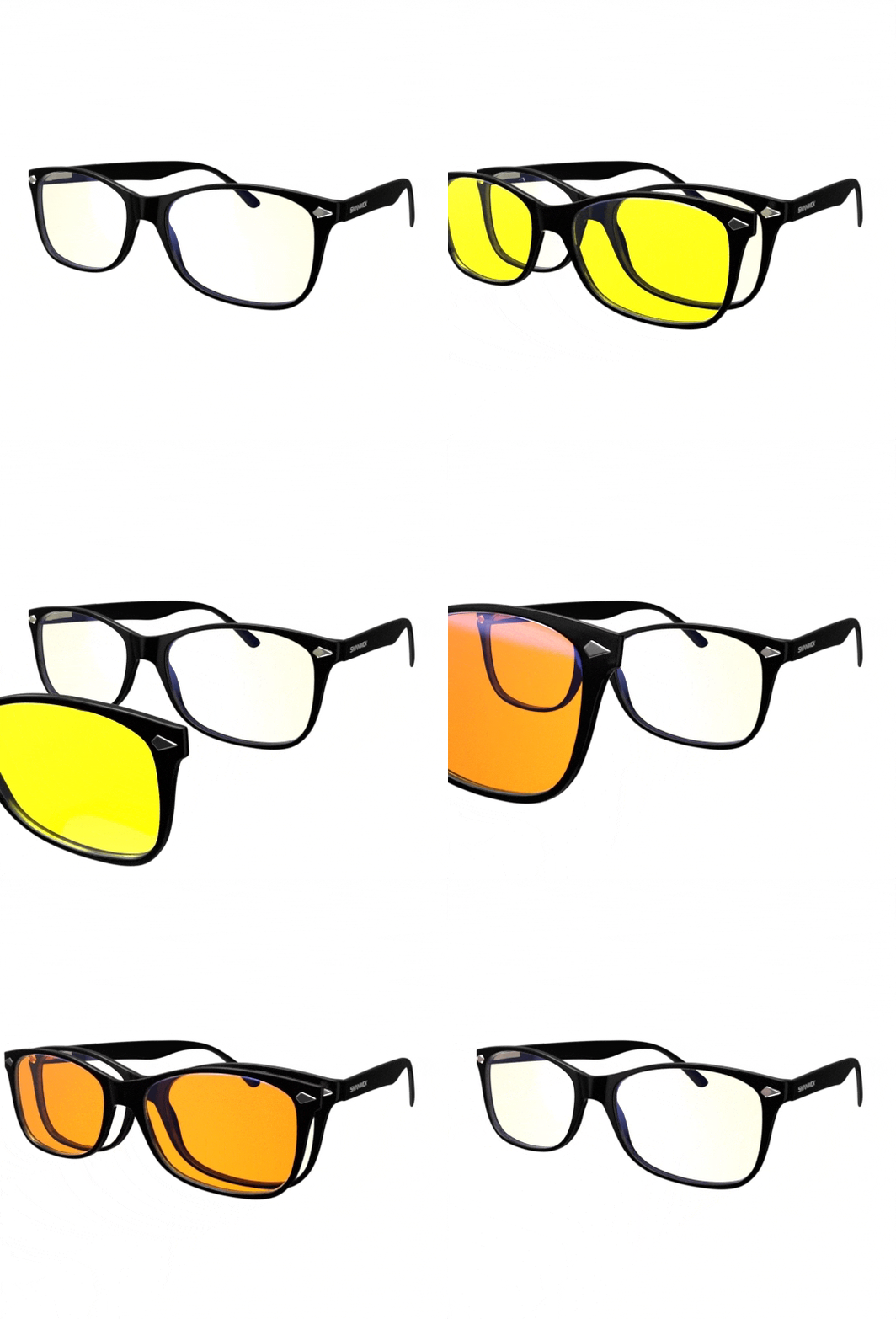
For daytime screen use, Focus Swannies are built with CR-39 prescription-grade lenses and anti-reflective coatings that eliminate double-glare risk, in lightweight frames designed for all-day wear. For evening use over contacts, Sleep Swannies provide deep amber filtering that protects melatonin without requiring you to remove your contacts before you're ready to sleep.
The combination works. Contact lenses handle your vision. Blue light glasses handle your light environment. Together, they give screen-heavy contact lens wearers a complete eye comfort solution that neither option delivers on its own.


