
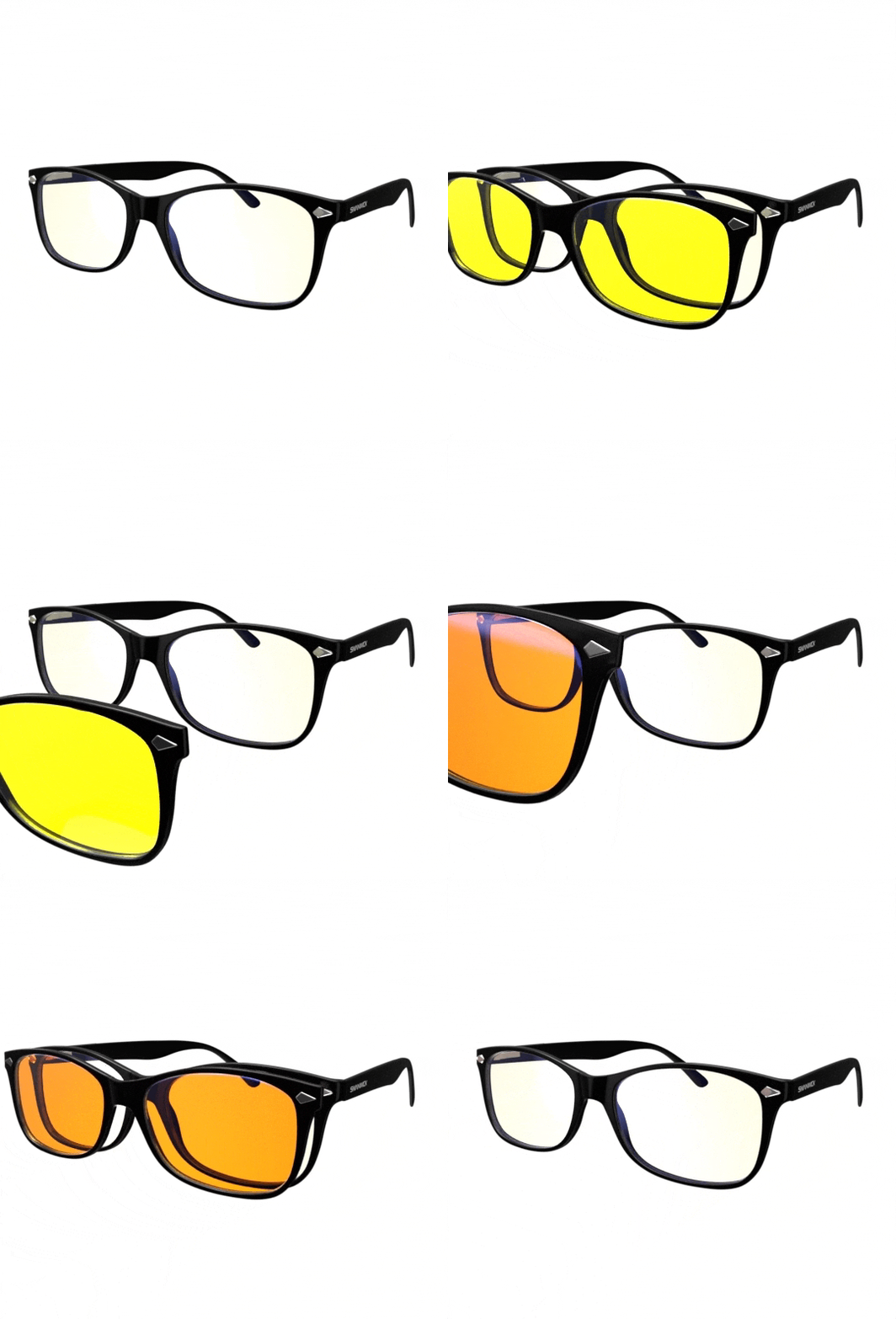



Reading glasses solve one problem: getting small text into focus. But for most people today, the reading that matters most happens on a backlit screen at close range, for hours at a time. Standard readers weren't designed for that environment. Blue light reading glasses were.
Here's what they are, why they work better for screen reading, and how to choose the right pair.

In this article:
-
Why You Need Reading Glasses with Blue Light Filter and Anti-Glare
-
How to Choose the Best Reading Glasses with Blue Light Protection
-
Finding Your Fit: Magnification Strengths and Styles for Women
What Are Blue Light Reading Glasses?
Blue light reading glasses are dual-purpose eyewear that combine magnification (measured in diopters) with specialized lens coatings that filter high-energy visible (HEV) light. Unlike standard reading glasses that only bring near text into focus, blue light readers simultaneously shield your retinas from the artificial light emitted by digital screens, tablets, and e-readers.
The magnification component works the same way as any reading glass: a convex lens increases the focal power of the eye for near distances, compensating for the loss of natural focusing ability (presbyopia) that typically begins in the 40s.
The blue light filtering component is a separate function, handled through anti-reflective coatings and lens pigments that target specific wavelengths in the 400-450nm range.
The combination matters because most people who need reading glasses are also spending significant time on screens. Screens are where the need for both functions converges most acutely.
Why You Need Reading Glasses with Blue Light Filter and Anti-Glare
Reading from a backlit digital display creates two distinct visual challenges at once. The first is accommodation: your eye has to focus at close range on small, pixelated text. The second is photic overload: your eye is simultaneously managing high-intensity artificial light projected directly at it from the screen surface.
Standard reading glasses address the first challenge and leave the second completely unmanaged. The result is the familiar pattern: you can read fine, but your eyes tire faster than they should, headaches build through longer sessions, and the screen somehow still feels harsh even through your readers.
Anti-glare (AR) coatings are equally important here. Without them, light bouncing off the lens surface causes micro-reflections that create a secondary overlay of visual noise on top of what you're trying to read.
Good AR coatings eliminate those reflections entirely, which reduces the unconscious focusing effort your eyes make to compensate for them. To understand exactly how these coatings interact with the light spectrum, our guide on what blue light glasses do covers the full mechanics.
The three functions, magnification, blue light filtering, and anti-glare, work together. Each one addresses a different source of visual strain during screen reading. Drop any one of them and you're leaving part of the problem unsolved.
How to Choose the Best Reading Glasses with Blue Light Protection
Not all blue light reading glasses are built to the same standard. Generic drugstore readers often add a blue light label to basic plastic lenses with minimal actual filtering capability and no proper AR coating. The AAO's guide to choosing reading glasses highlights anti-reflective coatings and lightweight lens materials as key quality markers. Here's what to actually look for:
-
Prescription-grade lens material. CR-39 optical-grade plastic or better. Cheap plastic lenses distort light at the edges, cause eye strain, and fail to hold coatings properly over time. Quality lens material is the foundation everything else depends on.
-
Verified blue light filtering. Look for specific wavelength filtering in the 400-450nm range, which is where the highest-energy screen light sits. Vague claims like "blue light protection" without spectral detail are a warning sign.
-
Multi-layer anti-reflective coating. Single-layer AR coatings reduce some glare. Multi-layer AR coatings applied to both sides of the lens eliminate it. For reading glasses used on screens, both-side treatment is the right standard.
-
Correct magnification for your reading distance. Screen reading typically happens at 18-24 inches, which is further than book reading. The right diopter for screen use is often one step lower than what you'd use for a physical book at 14 inches. More on this below.
-
Lightweight, well-fitted frames. Reading glasses are worn for extended sessions. Frame weight and fit directly affect comfort over time. Heavy frames create nose bridge and temple pressure that compounds the fatigue the lenses are meant to reduce.
Finding Your Fit: Magnification Strengths and Styles for Women
Choosing the right magnification is more specific than it looks. The correct diopter depends on both your natural near vision and the distance at which you're reading. As All About Vision explains, standard reading glass charts assume text held at around 14-16 inches. Screens typically sit at 18-24 inches, which is further away, so you generally need a lower diopter for screen reading than for physical books.
A practical starting guide by age:
-
40s: +1.00 to +1.50. Presbyopia is typically mild; start lower and test at your actual screen distance
-
50s: +1.50 to +2.00. Near focus has declined further; most people in this range are comfortable around +1.75 for screens
-
60s and beyond: +2.00 to +2.50. At this stage, a proper optometrist assessment is worth doing, since over-the-counter readers may not give you the precision you need
If you're between two strengths, go with the lower one. As All About Vision notes, reading glasses that are too strong cause more discomfort than those that are slightly too weak. More power than you need creates its own eye strain over extended use.
On fit and style: most women wearing reading glasses for screen use want frames they're comfortable wearing for hours, not just for a quick read. Lightweight acetate and thin metal frames in styles designed for extended wear make a real difference when you're putting them on at 9am and taking them off at 6pm. The right frame should feel like nothing after a few minutes.
Prioritize frame weight, nose bridge width, and temple fit over aesthetics, then find a style you like within those constraints. Both are achievable at the same time.

The Ultimate Setup for Clear, Strain-Free Reading
The best blue light reading glasses aren't the ones with the loudest claims. They're the ones built with prescription-grade lenses, proper multi-layer AR coatings, verified blue light filtering, and a frame light enough to forget you're wearing. That combination handles magnification, glare, and photic overload at the same time, which is exactly what screen reading demands.
Mass-produced plastic readers from a pharmacy shelf can help you read a menu. For extended screen sessions, the quality of the lens and coating determines whether you finish the day with comfortable, clear vision or not. The difference is immediately noticeable once you've used purpose-built optics.
Swanwick's blue light reading glasses collection is built for exactly this use case: precision-engineered lenses with full AR treatment and verified blue light filtering, in lightweight frames designed for all-day wear. Available across multiple diopter strengths so you can match your reading distance accurately.


