



If you have blue or green eyes and find yourself squinting in office lighting that doesn't seem to bother everyone else, there's a biological reason for that. Light sensitivity is directly tied to iris pigmentation, and the difference in how much melanin your eyes contain has real, measurable consequences for how they handle light.
Here's what the science says about eye color and light sensitivity, and what you can do about it.

In this article:
-
What Eye Color Is More Sensitive to Light? (Blue vs. Green vs. Brown)
-
Why Melanin Density Matters: Stray Light and Internal Scatter
-
Protecting Sensitive Light Eyes: Eyewear and Environment Tips
Are Light-Colored Eyes More Sensitive to Light?
Yes. People with lighter-colored eyes, including blue, green, and grey, are biologically more prone to light sensitivity (photophobia) than those with dark brown eyes. This happens because lighter irises contain significantly less melanin, allowing excess light to pass through the iris tissue itself and scatter internally across the retina.
Research published in NIH/PMC confirms that brown irises contain large amounts of melanin that absorb a substantial proportion of incoming light. In contrast, blue irises have reduced melanin content, and light scatters through the collagen matrix of the iris instead of being absorbed. This is the same principle that makes the sky look blue, and it's what makes blue eyes more vulnerable to glare.
The American Academy of Ophthalmology also notes that people with brown eyes have a lower incidence of macular degeneration and other light-related damage, with melanin pigment believed to offer additional protective benefits beyond light sensitivity alone.
What Eye Color Is More Sensitive to Light? (Blue vs. Green vs. Brown)
Sensitivity to light correlates directly with melanin concentration in the iris. The less melanin, the more light passes through and scatters inside the eye. Here's how the main eye colors rank:
Blue Eyes: Highest Light Sensitivity
Blue eyes contain the least melanin of any eye color. The iris has little to no brown pigment, meaning light isn't absorbed at the iris level but instead passes through and scatters throughout the eye's interior.
-
Most vulnerable to glare, harsh indoor lighting, and bright sunlight
-
More prone to squinting and visual fatigue in artificial light environments
-
Higher baseline risk of photophobia-related symptoms over the course of a day
Green and Grey Eyes: Moderate Light Sensitivity
Green and grey eyes contain a small amount of light brown pigment in the iris layers, which interacts with scattered light to produce their color. As the AAO explains, this mixture of pigment and scattered light means green and hazel eyes can appear different under different lighting conditions.
-
More light-sensitive than brown eyes, less so than blue
-
May notice more variability in comfort depending on the quality and intensity of light
-
Green eyes in particular can be reactive to high-contrast screen environments
Brown and Hazel Eyes: Lowest Light Sensitivity
Brown eyes have the highest melanin concentration of all eye colors. The pigment absorbs a large proportion of incoming light before it can scatter internally, providing a natural level of protection.
-
Most protected against glare and ambient light intensity
-
Less prone to squinting and visual fatigue under standard indoor lighting
-
Still susceptible to digital eye strain from prolonged screen use, but less so than light eyes under equivalent conditions
Why Melanin Density Matters: Stray Light and Internal Scatter
The iris functions like an aperture, regulating how much light enters through the pupil. In a densely pigmented brown iris, melanin absorbs light that strikes the iris surface, preventing it from passing through the tissue.
In a lightly pigmented blue iris, light penetrates the iris itself rather than being absorbed, entering the eye through routes other than the pupil.
This creates what ophthalmologists call intraocular stray light, essentially internal glare. Light that enters through the iris tissue rather than the pupil doesn't follow the controlled optical path through the lens to the retina.
Instead, it scatters across the retina's surface, reducing contrast and visual clarity and forcing the visual system to work harder to process the image it's trying to see.
Research published in NIH/PMC confirms this directly: eyes with reduced pigmentation reflect light to a greater extent, resulting in more severe photophobia. The same mechanism that causes photophobia in patients with pigmentation disorders is at work, on a less extreme scale, in everyday light-eyed individuals.
The practical result is that light-eyed people squint more, tire faster in bright environments, and are more likely to develop tension headaches from sustained exposure to harsh lighting, particularly the kind produced by LED office lighting and backlit screens.

How Screen Time Impacts People with Light Eyes
Digital screens present a specific challenge for light-eyed individuals. LED displays emit concentrated high-energy visible (HEV) blue light at close range, and because light eyes scatter incoming light more readily than dark eyes, that intensity compounds into faster and more pronounced visual fatigue.
The symptoms that build over a screen-heavy workday are more severe for people with blue or green eyes than for those with brown eyes under equivalent conditions.
Dry eyes develop faster because the squinting response reduces blink rate. Tension headaches come on earlier because the visual system is working harder to manage internal scatter. Focus feels less stable by mid-afternoon because the retina is processing more stray light than it would with denser iris pigmentation.
If your blue or green eyes are giving you headaches during screen sessions, the biology behind it is well-documented.
Our guide on whether blue light glasses help with headaches covers the mechanism in detail.
And if you've ever had your glasses cause discomfort rather than relief, our article on why blue light glasses might hurt your eyes explains exactly what to look for in a quality lens.
Evening screen use creates an additional layer of concern. Blue and green light in the 400-500nm range suppresses melatonin production, and light-eyed individuals may be more reactive to that photic stimulation given their lower threshold for light-induced neurological responses.
Protecting Sensitive Light Eyes: Eyewear and Environment Tips
If you have light eyes, managing your light environment is more important than it is for darker-eyed individuals. The good news is that the interventions are practical, affordable, and make a measurable difference.
-
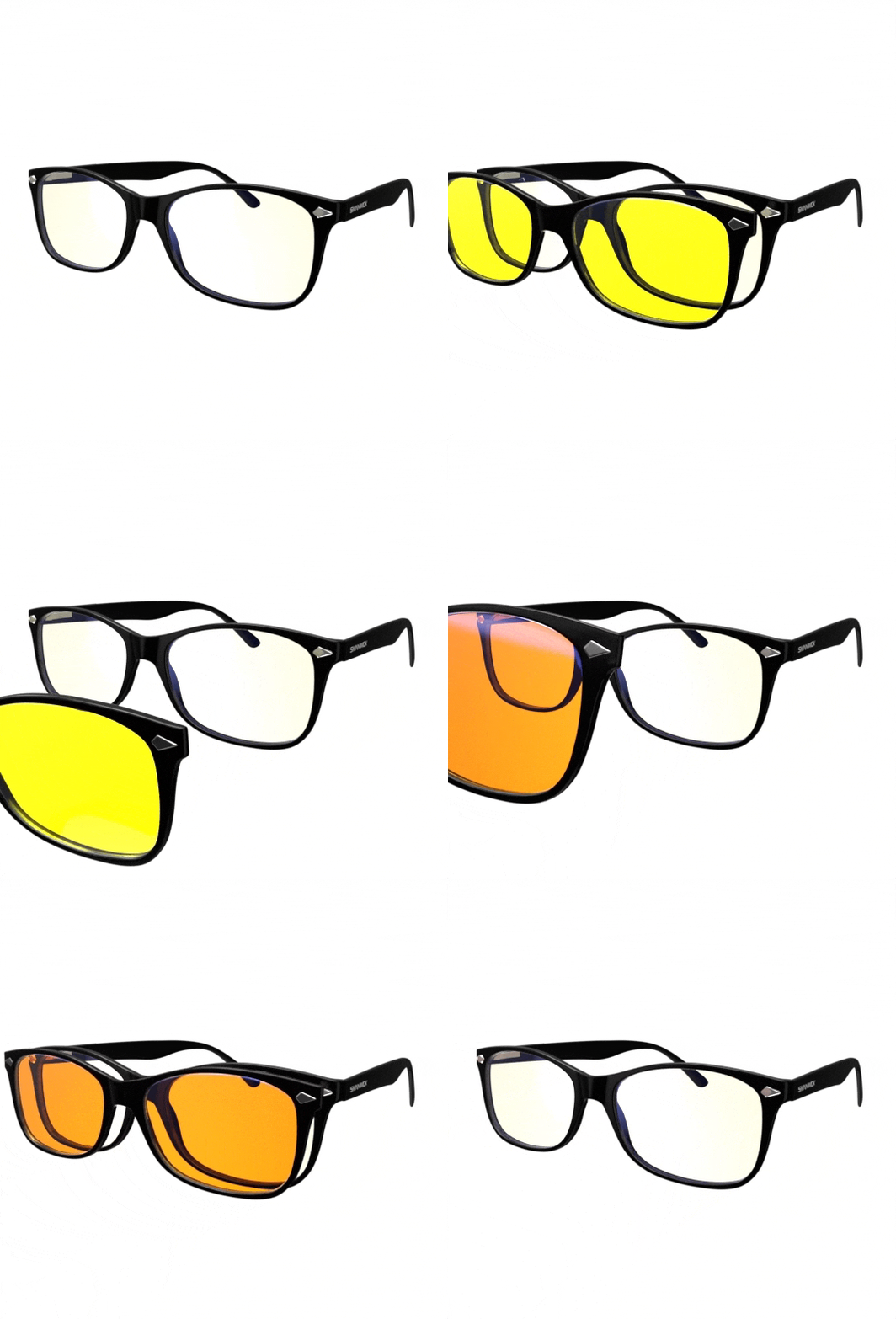
Wear clear blue light glasses during screen work. A quality pair with prescription-grade CR-39 lenses and multi-layer anti-reflective coatings filters the high-energy wavelengths that most aggressively trigger scatter in light-pigmented eyes. Focus Swannies are built for this: filtering the 400-450nm range linked to eye strain without affecting color perception or alertness.
-
Switch to amber lenses in the evening. In the 2-3 hours before bed, Sleep Swannies block the full blue and green spectrum (400-550nm) that suppresses melatonin. For light-eyed individuals who may be more reactive to photic stimulation, this matters especially.
-
Adjust screen brightness to match ambient light. A screen at maximum brightness in a dim room creates a high-contrast light differential that is particularly harsh for light-sensitive eyes. Match your screen brightness to the light level in your environment.
-
Reduce overhead lighting harshness. Cool-white fluorescent and LED office lighting tends to spike in the blue range that light eyes struggle with most. Warmer-toned bulbs (2700-3000K) create a less harsh light environment.
-
Practice the 20-20-20 rule consistently. Every 20 minutes, look at something 20 feet away for 20 seconds. For light-eyed people dealing with faster-accumulating fatigue, consistent breaks matter more than they might for darker-eyed colleagues.
-
Wear quality sunglasses outdoors. Light eyes are more vulnerable to UV damage and solar glare. Look for 100% UV400 protection and consider wraparound styles that prevent light from entering around the frame.
Light sensitivity from iris pigmentation isn't a condition that gets treated and resolved. It's a biological baseline you manage. The right tools, used consistently, mean it doesn't have to get in the way.


