



If you've ever been on a video call and noticed reflections of the room bouncing off your lenses, or finished a long screen session with eyes that feel gritty and tired, AR coating is the fix most people haven't thought to consider. It's one of the most impactful upgrades you can make to any pair of glasses, and it's frequently overlooked.
Here's everything you need to know: what it is, what it does, whether it's worth adding, and how to keep it in good condition.

In this article:
What Is Anti Reflective Coating on Glasses?
Anti reflective coating (also called AR coating or anti-glare coating) is an ultra-thin, multi-layered film applied to the front and back surfaces of optical lenses to eliminate unwanted reflections. Rather than blocking light, it works by using the principle of optical interference to cancel out reflected light waves, allowing more usable light to pass through the lens to your eye.
According to All About Vision, AR coating is a thin, multi-layer coating that eliminates reflections from the front and back surfaces of eyeglass lenses. Standard uncoated lenses transmit around 92% of light, losing the remainder to surface reflections. AR-coated lenses push that figure to 98-99%, a meaningful improvement in both visual clarity and comfort.
The coating itself is typically made from multiple layers of metallic oxides, each calibrated to a specific wavelength range. The more layers, the broader the range of reflections eliminated. Premium multi-layer AR coatings applied to both sides of the lens provide the most complete protection and the cleanest visual result.
It's worth knowing the terminology: anti reflective, anti-glare, and AR coating all refer to the same technology. Some manufacturers bundle additional features like scratch resistance, hydrophobic (water-repelling) treatment, or blue light filtering into the same coating stack, but the core function is always the same: eliminating reflection.
Core Benefits of Anti Reflective Coating
AR coating improves your glasses across every scenario you use them in. Here's what changes in practice:
Sharper, Clearer Vision on Screens
Without AR coating, light from your monitor bounces off the inner surface of your lens and creates a secondary overlay of reflections on top of what you're trying to read. Your eyes make constant micro-adjustments to compensate, contributing to the visual fatigue that builds through a screen-heavy workday.
-
Eliminates the ghost images and reflections that appear on uncoated lenses during screen use
-
Allows your eyes to process screen content more efficiently with less compensatory effort
-
Directly reduces visual fatigue and the tension headaches that come with sustained screen work
Safer Night Driving
Oncoming headlights, streetlamps, and illuminated road signs all create glare that bounces off uncoated lenses. At night, with your pupils dilated and your visual system already working harder in low light, this reflected glare can be genuinely disorienting. AR coating eliminates those reflections before they reach your eye.
-
Removes the star-burst effect around lights that many glasses wearers experience at night
-
Improves contrast and clarity in low-light environments where uncoated lens reflections are most disruptive
Better Appearance on Video Calls
Uncoated lenses create distracting reflections in photographs and on video calls, often obscuring your eyes completely. AR coating makes lenses nearly invisible, allowing people to see your eyes clearly without reflections of the room bouncing across the glass.
-
Lenses appear almost invisible rather than opaque and reflective
-
Particularly valuable for anyone who frequently appears on camera for work
Essential for Higher-Prescription Lenses
Higher-index prescription lenses have a greater refractive index, which means they reflect more light off their surface than standard plastic lenses. Without AR coating, wearers with stronger prescriptions see significantly more distracting reflections. AR coating is typically considered essential rather than optional for anyone with a moderate to strong prescription.
Is Anti Reflective Coating Worth It on Glasses?
Yes, for the vast majority of glasses wearers. For anyone who works on screens, drives at night, or wears a higher-index prescription, AR coating is overwhelmingly worth the investment. The modest additional cost pays back in visual comfort, reduced eye fatigue, and fewer headaches every single day.
The only scenario where it's a lower priority is someone who wears glasses very occasionally in bright outdoor settings only, where reflections are less of a problem and where photochromic or polarized lenses may be more relevant. For everyday wear, AR coating is the single most impactful optical upgrade available.
If eye strain and headaches from screen use are already a problem for you, AR coating addresses one significant contributor.
Our guide on whether blue light glasses help with headaches covers how reducing optical interference, including from lens reflections, directly reduces the frequency of screen-related tension headaches.

Can Anti Reflective Coating Be Added to Existing Glasses?
In theory, yes. In practice, it's rarely the right approach. AR coating is applied during the manufacturing process using a vacuum-chamber deposition method where metallic oxide layers are bonded to the lens surface at the molecular level. This process works best on clean, new lens surfaces.
Adding AR coating to lenses that have already been worn presents several problems. Existing micro-scratches on the lens surface prevent the coating from bonding evenly. Oils, contaminants, and any previous coatings interfere with adhesion. The coating is unlikely to perform as well as one applied during original manufacturing, and the process may not be cost-effective relative to simply purchasing new lenses with AR coating included.
As All About Vision notes, while methods exist for removing and reapplying coatings, it's best to discuss options with an eyewear professional first, as the results may not match the quality of factory-applied coating. The practical answer for most people is to specify AR coating when ordering new lenses rather than attempting to add it to existing ones.
How to Clean Glasses with Anti Reflective Coating Safely
AR coating requires more careful cleaning than bare plastic lenses. The microscopic layers that make the coating work are precisely engineered, and harsh cleaning methods degrade them over time, causing the coating to haze, streak, or peel prematurely.
The safe cleaning protocol is the same as for any quality coated lens:
-
Rinse under lukewarm water first. This removes grit and particles before any contact with fabric.
-
Apply a single drop of lotion-free, fragrance-free dish soap to each lens.
-
Gently work the soap across both sides of the lens with clean fingertips.
-
Rinse thoroughly until all soap residue is gone.
-
Dry with a clean microfiber cloth using light circular pressure.
What to avoid: household glass cleaners containing ammonia or alcohol (including Windex), paper towels and tissues, shirt sleeves, and dry wiping before rinsing.
All of these cause cumulative micro-scratching that degrades the coating faster than normal wear.
For the full step-by-step cleaning guide including frame care and microfiber cloth maintenance, see our guide to cleaning blue light glasses safely.
Finding the Perfect Shield: Combining Anti-Glare with Blue Light Protection
AR coating and blue light filtering solve two distinct but complementary problems. AR coating eliminates reflections from the lens surface. Blue light filtering targets the specific wavelengths in the 400-450nm range that cause the most eye strain, headaches, and circadian disruption from screens. A lens with both addresses the full picture of what makes screens hard on your eyes.
Cheap blue light glasses often carry a blue light label but no proper AR coating. The result is a lens that attempts to filter one source of strain while creating another: lens reflections that force your visual system to work harder. Quality matters.
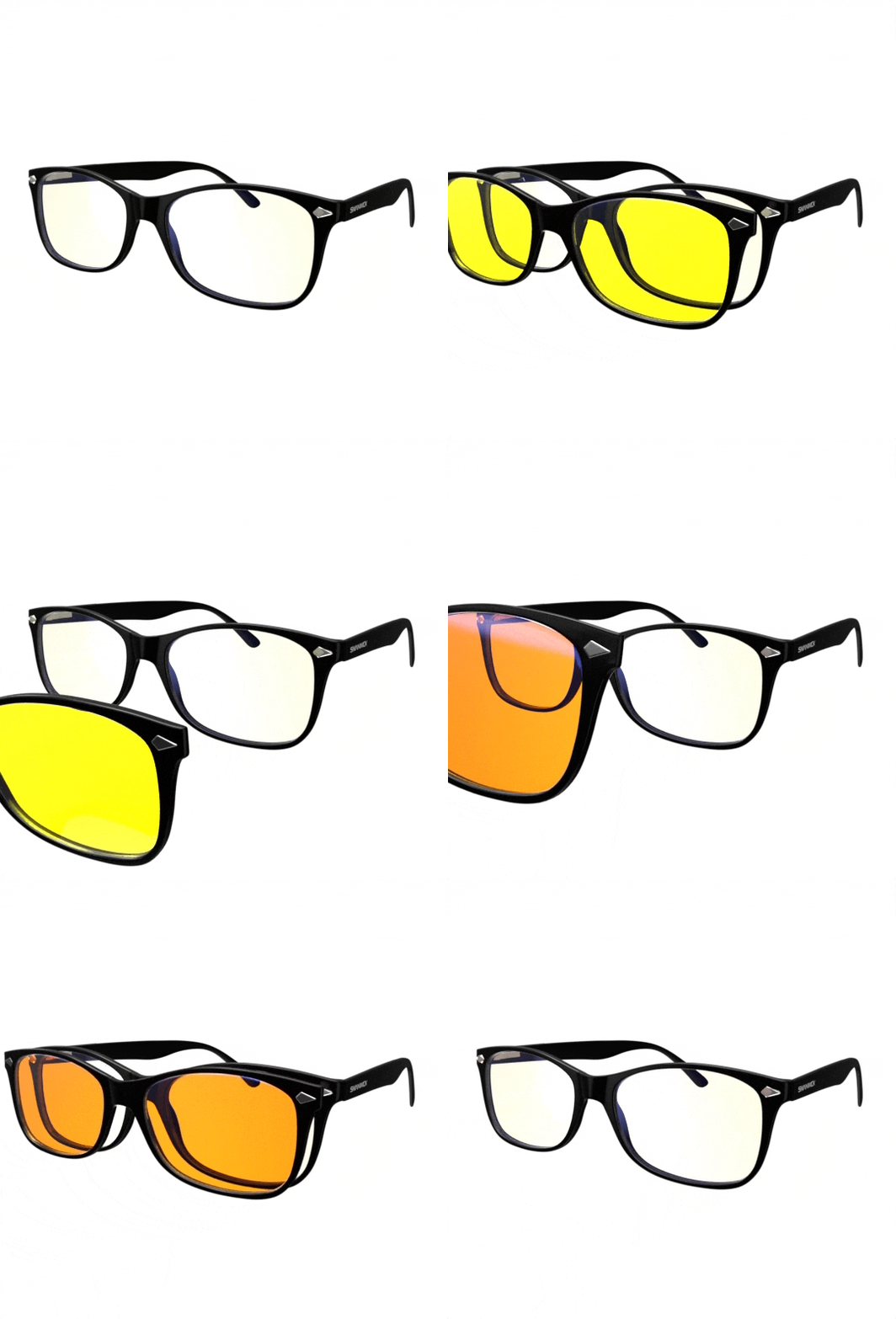
Swanwick's Focus Swannies are built with CR-39 prescription-grade lenses with multi-layer anti-reflective coatings on both sides, plus verified blue light filtering in the 400-450nm range. For daytime screen use, that combination handles both the reflective and photic sources of eye strain in one lens.
For evening use, Sleep Swannies add deep amber filtering across the full 400-550nm spectrum to protect melatonin in the hours before sleep, again with proper AR coatings so the lens itself doesn't add to the visual burden.


