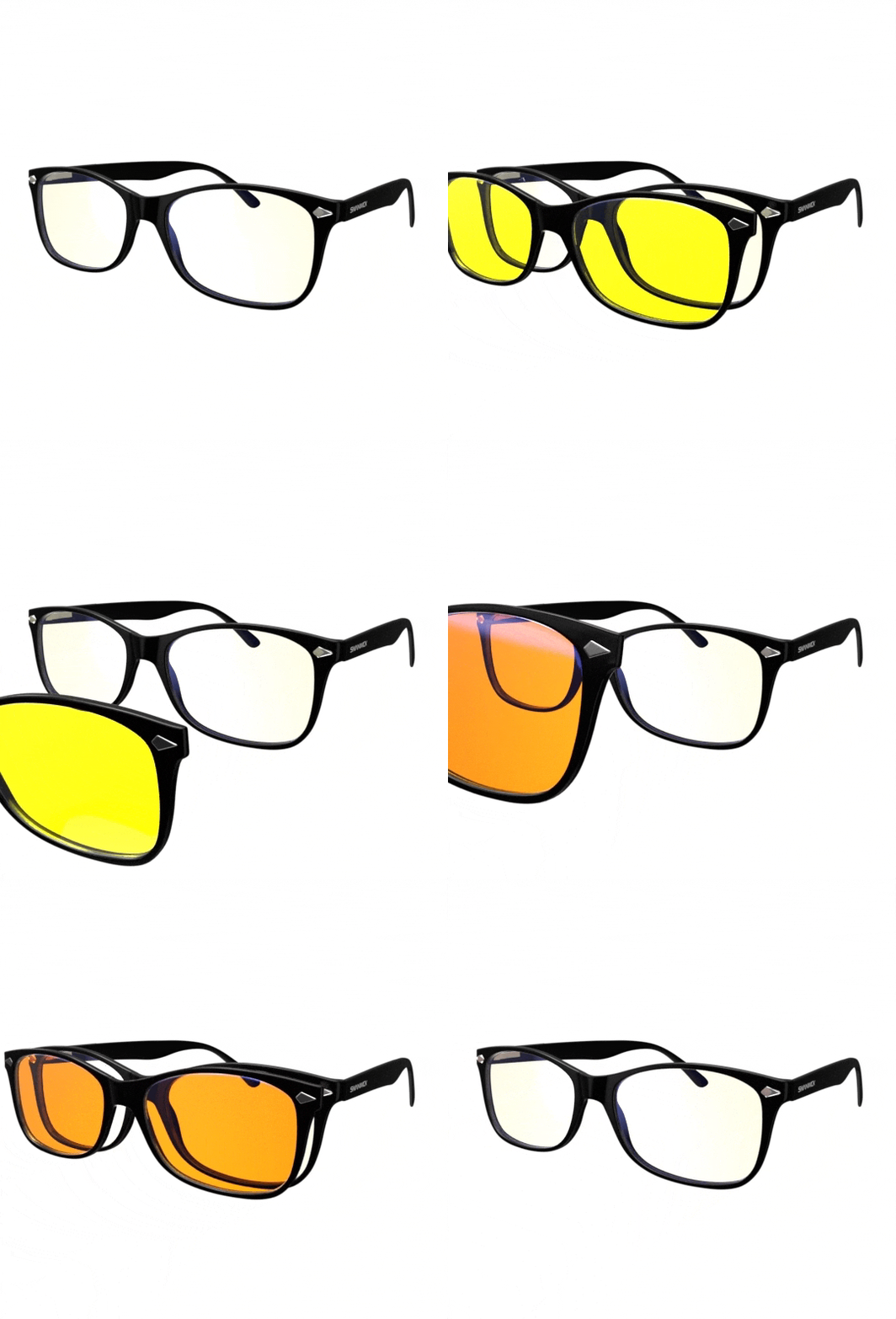
Not all blue light glasses are created equal, so it’s important to look beyond just the tint.
First, consider what wavelengths the lenses are designed to filter. The most effective lenses target the blue light spectrum associated with digital screens and evening light exposure, rather than offering minimal or cosmetic filtering.
Next, look for purpose-built lenses. Daytime lenses should support focus and reduce eye strain, while evening or night lenses should be designed to help your body wind down by reducing blue light that can interfere with your natural sleep cycle.
It’s also important that the lenses are tested and transparent in their performance. Third-party testing and clear specifications indicate that the product is engineered for real-world use, not just appearance.
Finally, consider comfort and usability. High-quality blue light glasses should balance effectiveness with visual clarity, allowing you to go about your routine without excessive distortion.
The right pair isn’t just about blocking light, it’s about supporting how you function, focus, and recover throughout the day.