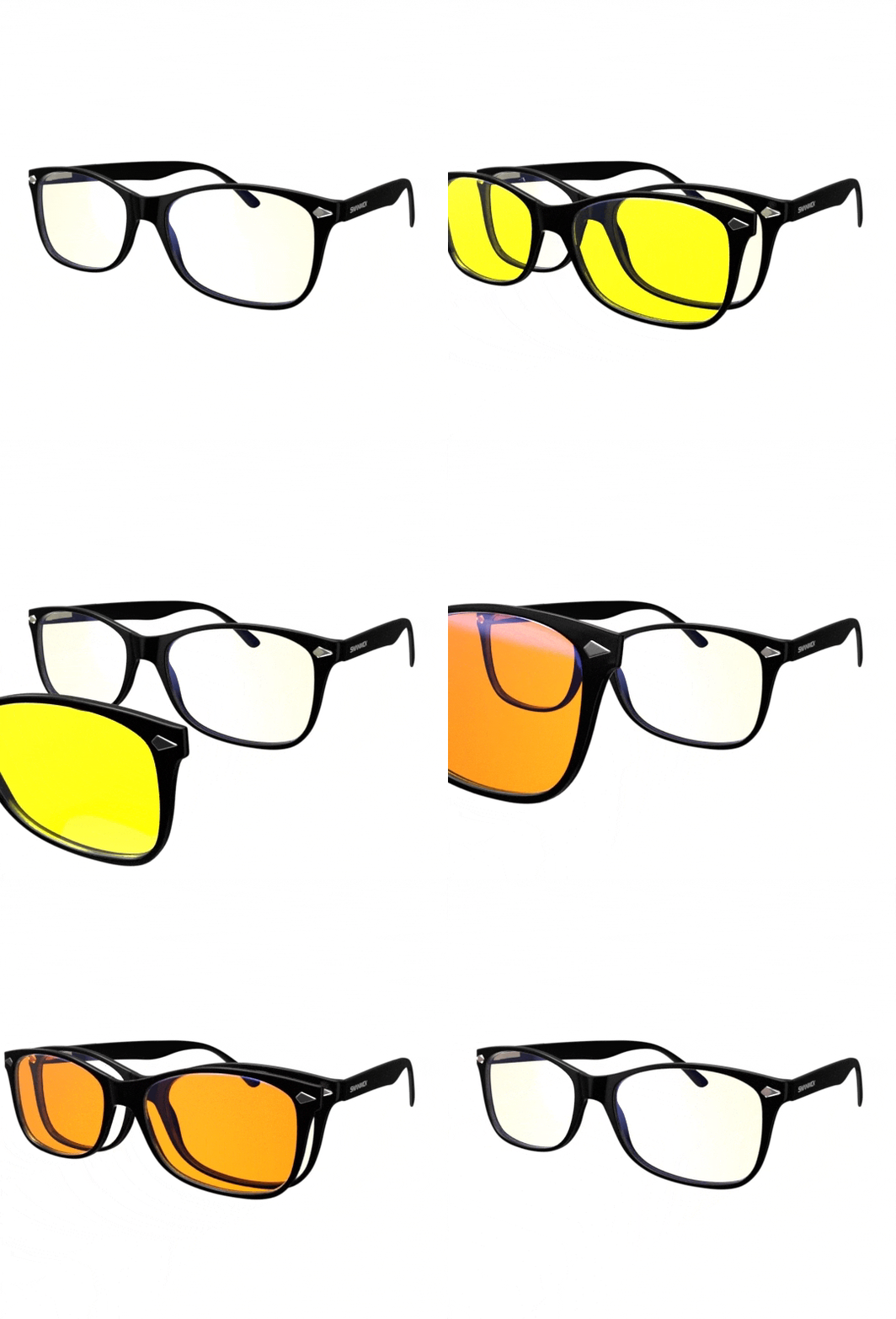
The most scientifically validated blue light glasses

For over a decade, Swanwick Sleep has led the science of blue-light management and circadian performance.

Focus Swannies: Clear lenses designed for daytime and screen use that reduce eye strain and visual fatigue while increasing your focus.

Relax Swannies: Yellow lenses that gently reduce unstimulating blue light to help your body wind down naturally.

Sleep Swannies: Amber lenses worn for 1.5 hours before bed that block 99% of blue light to protect melatonin and signal your brain that it’s time to sleep.


Frequently Asked Questions

Why Swanwick?

Swanwick is the only brand of blue light blockers that have routinely sought third party validation. We've been studied by the University of Washington and the University of Indiana. We've been featured in a study by SleepScore Labs, and had research findings published in the Journal of Applied Psychology and Harvard Business Review.

There is no other brand on the market that has gone to the lengths we have to make the validation of our technology the backbone of our company. Talk is cheap in the blue light world. Why Swanwick? Because our actions speak way louder than their words.

What is blue light?

Where It Comes From

  • Natural: The sun is the primary and largest source of natural blue light.
  • Artificial: It is also emitted by digital screens (smartphones, laptops, TVs) and indoor lighting like LEDs and fluorescent bulbs.

How It Affects You

  • The Good: Natural blue light during the day boosts alertness, improves mood, and regulates your body's circadian rhythm (sleep-wake cycle).
  • The Bad: Exposure to artificial blue light at night suppresses melatonin production, which can trick your brain into thinking it is still daytime and disrupt your sleep. It is also linked to digital eye strain (often called Computer Vision Syndrome) because it scatters more easily than other light, reducing visual contrast.

How to Manage Exposure

You can reduce the impact of blue light by:

  • Turning on screen filters: Activate built-in "Night Shift" or "Dark Mode" settings on your devices.
  • Following the 20-20-20 rule: Look at something 20 feet away for 20 seconds, every 20 minutes when using screens.
  • Using blue-light blocking glasses: Specialty glasses with amber or specialized coatings can help filter these wavelengths, particularly in the hours leading up to sleep.
Why can’t I just dim the lights or use night mode?

Even dim indoor lighting and screens still emit enough blue light to disrupt your circadian rhythm. Sleep Swannies® provide complete protection regardless of your environment, making them far more effective.

What are blue light glasses used for?

Blue light has been shown to inhibit the body's ability to produce melatonin, the hormone that helps us get to ssleep, stay asleep, and achieve quality sleep. When worn in the hours before bedtime, Sleep Swannies filter out this blue light so your body can produce sleep-promoting melatonin naturally, allowing your body to properly prepare for sleep, find yourself asleep faster, and sleep better all night long.

When worn during prolonged use of electronic devices, Focus Swannies help prevent symptoms of digital eye strain such as sore eyes, headaches and fatigue.

Which blue light glasses are right for me?

Not all blue light glasses are created equal, so it’s important to look beyond just the tint.

First, consider what wavelengths the lenses are designed to filter. The most effective lenses target the blue light spectrum associated with digital screens and evening light exposure, rather than offering minimal or cosmetic filtering.

Next, look for purpose-built lenses. Daytime lenses should support focus and reduce eye strain, while evening or night lenses should be designed to help your body wind down by reducing blue light that can interfere with your natural sleep cycle.

It’s also important that the lenses are tested and transparent in their performance. Third-party testing and clear specifications indicate that the product is engineered for real-world use, not just appearance.

Finally, consider comfort and usability. High-quality blue light glasses should balance effectiveness with visual clarity, allowing you to go about your routine without excessive distortion.

The right pair isn’t just about blocking light, it’s about supporting how you function, focus, and recover throughout the day.